

Human CCL5/RANTES Protein, Tag Free

製品番号/仕様
価格
Availability
数量
CC5-H5113-20ug
$185.00
In Stock - Order by 4 PM ET for overnight delivery on Nov. 27, 2026.
CC5-H5113-50ug
$370.00
In Stock - Order by 4 PM ET for overnight delivery on Nov. 27, 2026.
CC5-H5113-1mg (200ug X 5)
$3,400.00
In Stock - Delivery in 2 weeks
CC5-H5113
製品金額 :
$ 0
推奨新製品 Request Quote
Contact Us
Contact Us
製品金額:
$ 0
  • 製品詳細
  • データ表示
  • Reviews & Citations
  • Important Statement
  • Resources
Synonyms

EoCP, Eosinophil chemotactic cytokine, SIS-delta, Small-inducible cytokine A5, T cell-specific protein P228, TCP228, D17S136E, SCYA5, CCL5, C-C motif chemokine 5 T-cell-specific protein RANTES

Source

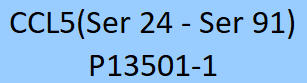
Human CCL5/RANTES Protein, Tag Free (CC5-H5113) is expressed from E. coli cells. It contains AA Ser 24 - Ser 91 (Accession # P13501-1).

Predicted N-terminus: Ser 24
Molecular Characterization

This protein carries no "tag".

The protein has a calculated MW of 7.9 kDa. The protein migrates as 8-9 kDa when calibrated against Star Ribbon Pre-stained Protein Marker under reducing (R) condition (SDS-PAGE).

Purity

>90% as determined by SDS-PAGE.

Formulation

Lyophilized from 0.22 μm filtered solution in PBS, pH7.4 with trehalose as protectant.

Contact us for customized product form or formulation.

Reconstitution

Please see Certificate of Analysis for specific instructions.

For best performance, we strongly recommend you to follow the reconstitution protocol provided in the CoA.

Shipping and Storage

This product is shipped at ambient temperature.

For long term storage, the product should be stored at lyophilized state at -20°C or lower.

Please avoid repeated freeze-thaw cycles.

This product is stable after storage at:
  • -20°C to -70°C for 12 months in lyophilized state;
  • -70°C for 3 months under sterile conditions after reconstitution.

バックグランド

C-C chemokine ligand 5 (CCL5), also known as RANTES, is a target gene of NF-kappaB, and is expressed by T lymphocytes, macrophages, platelets, synovial fibroblasts, tubular epithelium, and certain types of tumour cells. CCL5 plays a role in recruiting a variety of leukocytes into inflammatory sites including T cells, macrophages, eosinophils, and basophils. CCL5 activity is mediated through its binding to CCR1, CCR3, and mainly CCR5.

ACRO Scientific Leadership Award

Supporting the scientists driving cell & gene therapy forward

Apply Now