Cat. No. / Size
Price
Availability
Qty
RAL-H52A6-50ug
$360.00
RAL-H52A6-1mg
$2,760.00
RAL-H52A6
Sub-Total :
$ 0
Customize Product Request Quote
Contact Us
Contact Us
Sub-Total:
$ 0
  • Performance Data
  • Reviews & Citations
  • Important Statement
  • Resources
  • 分子别名(Synonym)

    RANKL,CD254,TRANCE,OPGL,ODF

  • 表达区间及表达系统(Source)

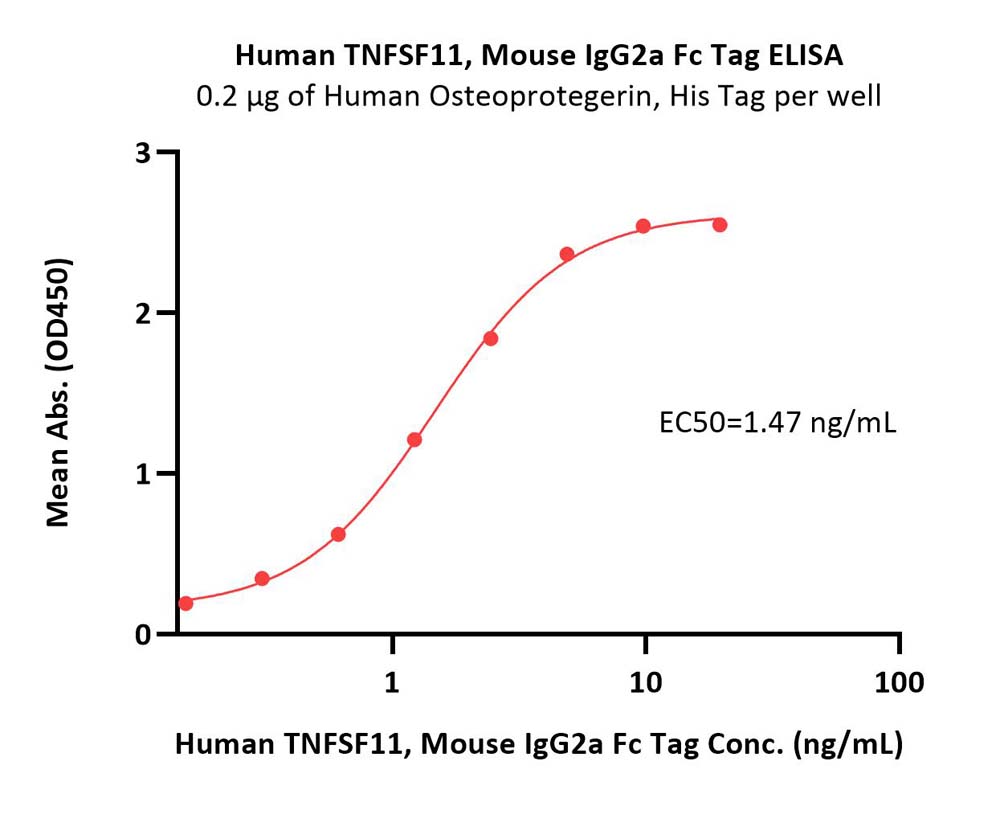
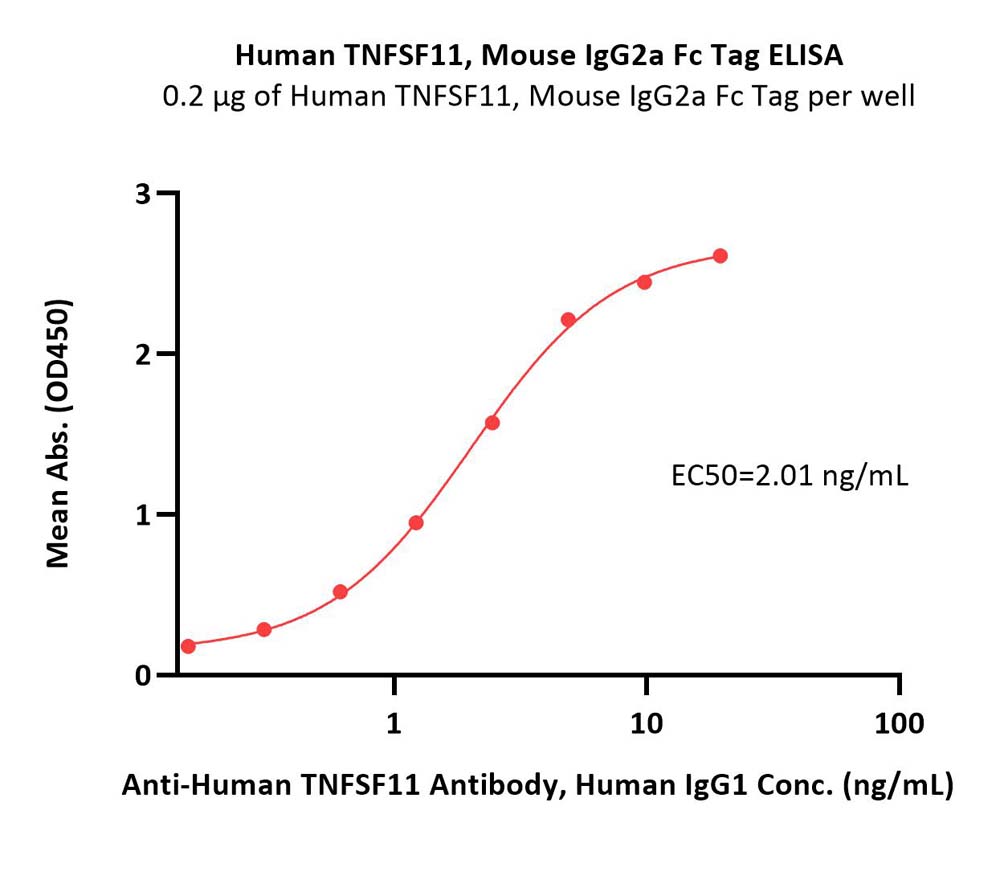
    Human TNFSF11, Mouse IgG2a Fc Tag (RAL-H52A6) is expressed from human 293 cells (HEK293). It contains AA Gly 64 - Asp 245 (Accession # AAC51762.1).

    Predicted N-terminus: Glu

    Request for sequence
  • 蛋白结构(Molecular Characterization)

    TNFSF11 Structure

    This protein carries a mouse IgG2a Fc tag at the N-terminus.

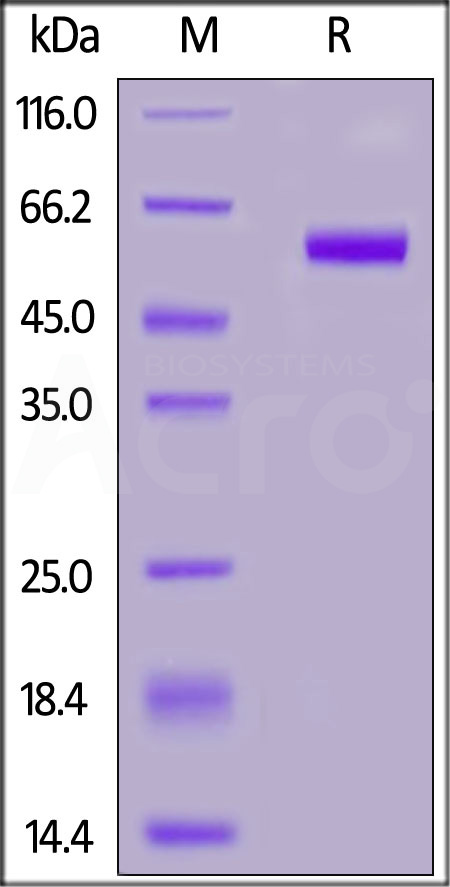
    The protein has a calculated MW of 47.4 kDa. The protein migrates as 55-60 kDa under reducing (R) condition (SDS-PAGE) due to glycosylation.

  • 内毒素(Endotoxin)

    Less than 0.1 EU per μg by the LAL method / rFC method.

  • 纯度(Purity)

    >95% as determined by SDS-PAGE.

  • 制剂(Formulation)

    Lyophilized from 0.22 μm filtered solution in PBS, pH7.4 with trehalose as protectant.

    Contact us for customized product form or formulation.

  • 重构方法(Reconstitution)

    Please see Certificate of Analysis for specific instructions.

    For best performance, we strongly recommend you to follow the reconstitution protocol provided in the CoA.

  • 存储(Storage)

    For long term storage, the product should be stored at lyophilized state at -20°C or lower.

    Please avoid repeated freeze-thaw cycles.

    This product is stable after storage at:
    1. -20°C to -70°C for 12 months in lyophilized state;
    2. -70°C for 3 months under sterile conditions after reconstitution.
  • 质量管理控制体系(QMS)

    1. 质量管理体系(ISO, GMP)
    2. 质量优势
    3. 质控流程

Background

Receptor activator of nuclear factor kappa-B ligand (RANKL), also known as tumor necrosis factor ligand superfamily member 11 (TNFSF11), TNF-related activation-induced cytokine (TRANCE), osteoprotegerin ligand (OPGL), and osteoclast differentiation factor (ODF), is known as a type II membrane protein and is a member of the tumor necrosis factor (TNF) superfamily. RANKL, through its ability to stimulate osteoclast formation and activity, is a critical mediator of bone resorption and overall bone density. Some findings also suggestion some cancer cells, particularly prostate cancer cells, can activate an increase in bone remodeling and ultimately increase overall bone production.[17] This increase in bone remodeling and bone production increases the overall growth of bone metastasizes. The overall control of bone remodeling is regulated by the binding of RANKL with its receptor or its decoy receptor, respectively, RANK and OPG.