







 COA



- 製品詳細
- データ表示
- Reviews & Citations
- Resources
1/2

CNR1, cannabinoid receptor 1, CANN6, CB-R, CB1, CB1A, CB1K5, CB1R, CNR
Nanodisc Biotinylated Human CNR1 Full Length Protein, Flag Tag&His,Avitag (CN1-H85D4) is expressed from Baculovirus-Insect cells. It contains AA Gly 99 - Ala 301 & Asp 333 - Ser 414 (Accession # P21554-1).
Predicted N-terminus: Asp
This protein carries a Flag tag at the N-terminus and a polyhistidine tag at the C-terminus followed by an Avi tag (Avitag™).
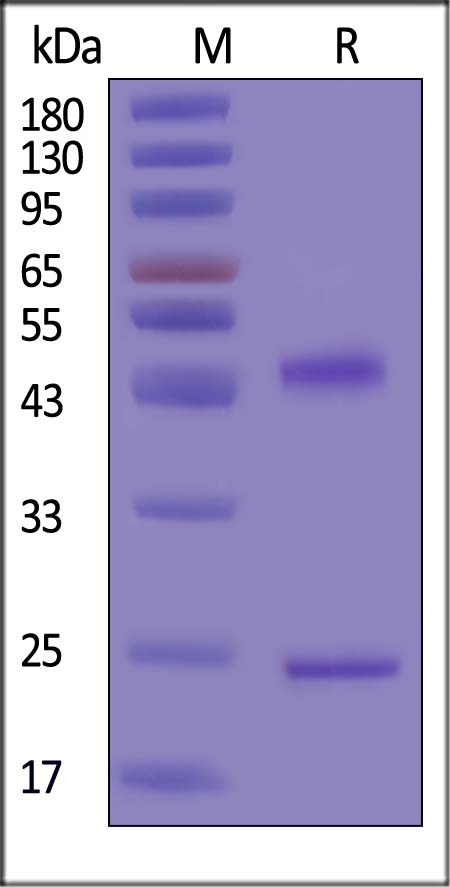
The protein has a calculated MW of 60.3 kDa. The protein migrates as 25 kDa and 43-45 kDa when calibrated against Star Ribbon Pre-stained Protein Marker under reducing (R) condition (SDS-PAGE) due to glycosylation.
Within the expressed region, several mutations were introduced to optimize the protein expression and stability.
*The isotype control of empty/mock nanodisc (Cat. No. APO-H81Q5) is sold separately and not included in protein, you can follow the link for product information.
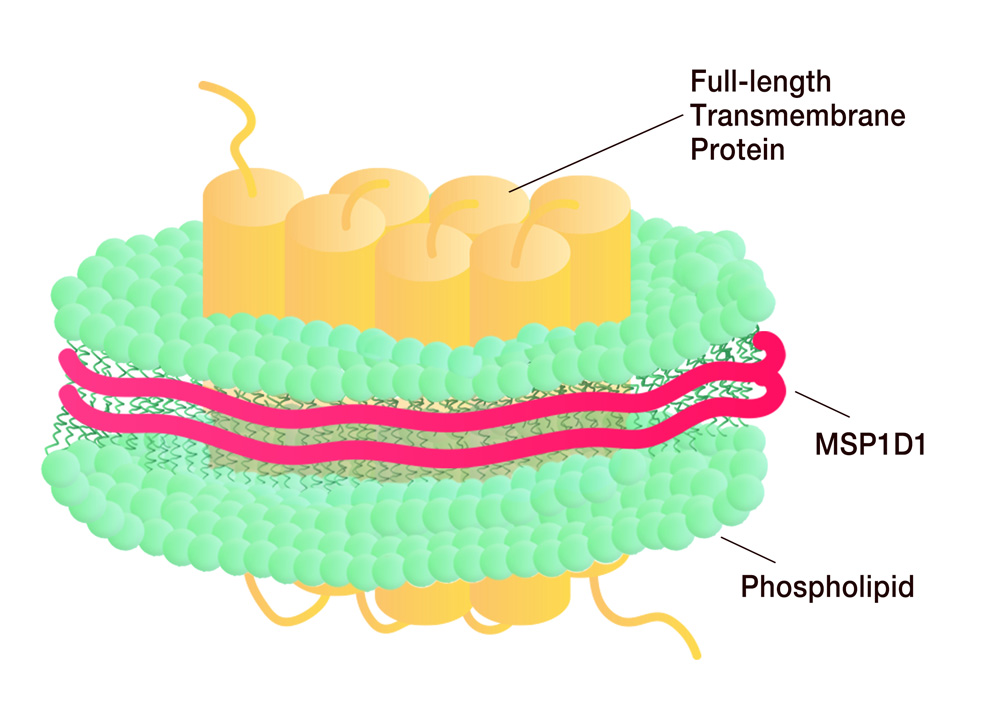
Nanodisc membrane protein is wrapped by a synthetic phospholipid bilayer membrane structure, composed of membrane scaffold proteins (MSPs) and phospholipids.

Nanodisc reconstitution is a self-assembly process that starts from purified, detergent-solubilized membrane proteins and reconstitutes them into synthetic phospholipid bilayers stabilized by MSP1D1 membrane scaffold protein. This creates a stable, detergent-free environment that preserves native conformation and biological activity, with excellent homogeneity and full compatibility with cell-based assays such as FACS and binding assays in antibody discovery and screening (ELISA),etc.
Biotinylation of this product is performed using Avitag™ technology. Briefly, the single lysine residue in the Avitag is enzymatically labeled with biotin.
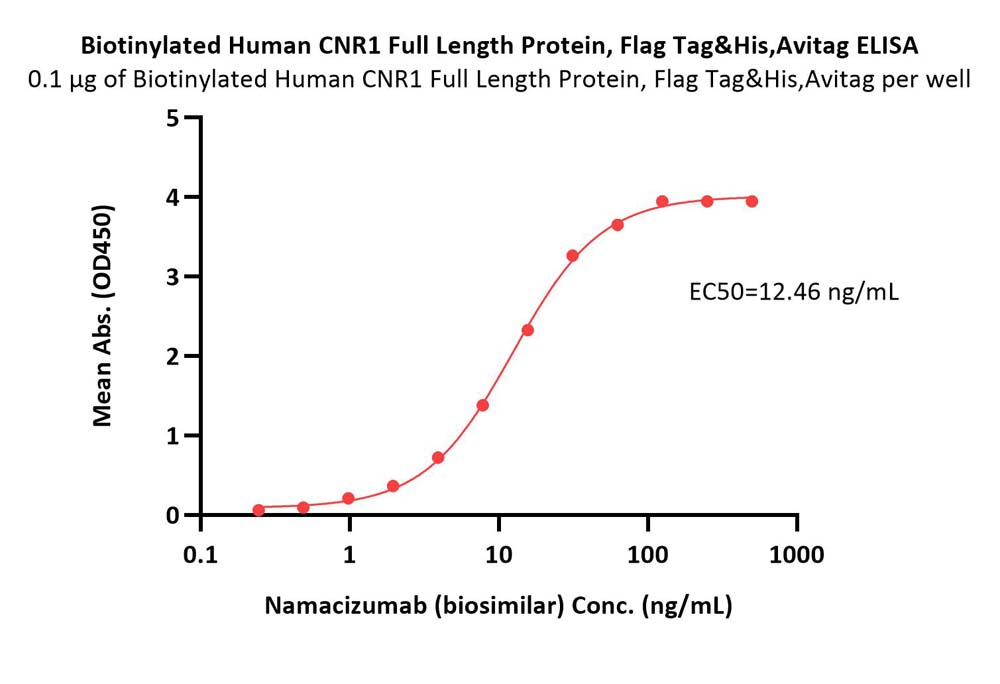
0.7-1.0 as determined by the SABA assay / HABA assay / binding ELISA.
Less than 1.0 EU per μg by the LAL method / rFC method.
>90% as determined by SDS-PAGE.
Supplied as 0.2 μm filtered solution in 20 mM HEPES, 150 mM NaCl, pH7.5 with trehalose as protectant.
Contact us for customized product form or formulation.
This product is supplied and shipped on dry ice.
Please avoid repeated freeze-thaw cycles.