In Vivo CAR-T Therapy: Next-Generation CAR-T Cell Engineering and Gene Delivery Advances
 Publication Date:2026-07-29
 Page Views:16
Introduction
Chimeric antigen receptor T-cell (CAR-T) therapy has transformed the treatment of hematological malignancies, demonstrating remarkable clinical success in diseases such as leukemia, lymphoma, and multiple myeloma. However, all currently approved CAR-T therapies rely on an ex vivo manufacturing process, in which patient-derived T cells are collected, genetically engineered, expanded, and quality-tested before being reinfused. Although highly effective, this personalized workflow is complex, time-consuming, and costly. Manufacturing typically takes several weeks and requires specialized facilities, making treatment less accessible for patients with rapidly progressing disease. In addition, variability in patient-derived T cells can affect manufacturing success and product consistency.
To address these challenges, In Vivo CAR-T therapy has emerged as a promising next-generation approach. Instead of engineering T cells outside the body, In Vivo CAR-T delivers CAR-encoding genetic material directly to endogenous T cells using targeted delivery systems, enabling in situ generation of therapeutic CAR-T cells. By simplifying manufacturing and moving toward a drug-like treatment model, this strategy has the potential to improve scalability, reduce costs, and expand patient access to engineered cell therapies.
What Is In Vivo CAR-T Therapy?
In Vivo CAR-T therapy refers to the direct genetic modification of T cells within the patient's body. Instead of collecting and expanding immune cells in specialized manufacturing facilities, therapeutic nucleic acids encoding a CAR construct are delivered systemically using targeted delivery vehicles. Once the genetic payload reaches the desired T-cell population, the cells begin expressing the CAR receptor and acquire tumor-specific cytotoxic activity. This strategy transforms CAR-T therapy from a personalized cell manufacturing process into a treatment that more closely resembles conventional biologic or genetic medicines.
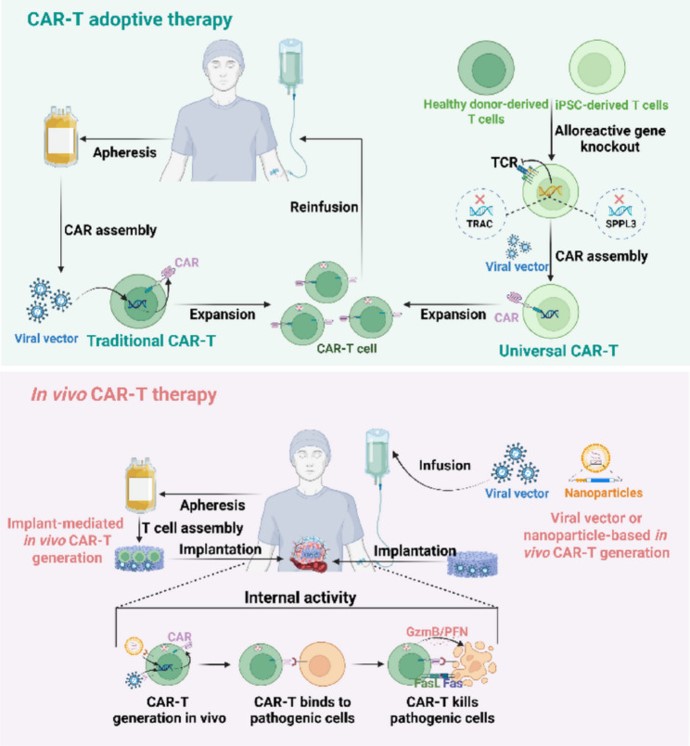
Figure 1. The basic technical pathways of adoptive therapy and in vivo CAR-T therapy. (doi:10.1186/s40164-025-00725-5)
Why Is In Vivo CAR-T Considered the Next Generation of Cell Therapy?
The appeal of In Vivo CAR-T extends far beyond simplifying manufacturing. It represents a fundamentally different therapeutic concept with several potential advantages over traditional ex vivo approaches.
Table 1. Comparison of Traditional Ex Vivo CAR-T and In Vivo CAR-T Therapies
| Feature | Traditional Ex Vivo CAR-T | In Vivo CAR-T |
|---|---|---|
| Manufacturing | Patient-specific cell production | Direct in vivo engineering |
| Treatment workflow | Multi-step manufacturing | Drug-like administration |
| Production timeline | Typically several weeks | Potential for rapid treatment |
| Manufacturing cost | High | Expected to decrease with scale |
| Standardization | Individualized batches | Potential for standardized products |
| Scalability | Manufacturing capacity limited | Better suited for large-scale production |
By eliminating cell collection, expansion, and transportation, In Vivo CAR-T may eventually reduce production costs, improve manufacturing consistency, and shorten treatment timelines. Importantly, researchers also hypothesize that T cells engineered within their native physiological environment may exhibit different differentiation states, persistence characteristics, and functional profiles compared with extensively expanded ex vivo cells. Although these hypotheses continue to be investigated clinically, they highlight the unique biological opportunities offered by in vivo engineering.
Gene Delivery: The Foundation of In Vivo CAR-T
The success of In Vivo CAR-T depends almost entirely on one critical component: precise and efficient gene delivery. Unlike conventional gene therapy, where broad tissue transduction may be acceptable, In Vivo CAR-T requires highly selective delivery to specific immune cell populations while minimizing off-target expression. Two major delivery strategies are currently being explored.
1. Viral Delivery Platforms
Viral vectors remain one of the earliest approaches for in vivo immune cell engineering. Engineered lentiviral vectors are capable of efficiently introducing CAR genes into T cells and can support durable transgene expression. Several biotechnology companies have advanced targeted lentiviral platforms into early clinical evaluation, demonstrating the feasibility of generating CAR-T cells directly inside patients.
Although viral vectors generally achieve high transduction efficiency, challenges remain regarding manufacturing complexity, production cost, immunogenicity, and long-term safety considerations. Consequently, significant efforts are focused on developing alternative non-viral technologies.
2. Targeted Lipid Nanoparticles (tLNPs): A Rapidly Emerging Platform
Following the success of mRNA vaccines, lipid nanoparticles (LNPs) have become one of the most promising delivery systems for next-generation gene therapies. For In Vivo CAR-T applications, researchers are developing targeted lipid nanoparticles (tLNPs) that selectively deliver mRNA or other genetic payloads to T cells. Compared with viral vectors, tLNPs offer several attractive advantages.
Table 2. Key Advantages of Targeted Lipid Nanoparticles (tLNPs) for In Vivo CAR-T Delivery
| Advantages of Targeted LNPs | Potential Benefits |
|---|---|
| Non-viral delivery | Reduced vector-related safety concerns |
| Flexible cargo | Compatible with mRNA and other nucleic acids |
| Lower immunogenicity | Potential for repeat dosing |
| Scalable manufacturing | Established industrial production processes |
| Modular surface engineering | Enables cell-specific targeting strategies |
Recent advances have demonstrated that antibodies, antibody fragments, ligands, or other targeting molecules can be conjugated to LNP surfaces, allowing selective recognition of T-cell surface markers such as CD3, CD4, CD5, CD7, and CD8. Interestingly, emerging studies suggest that receptor abundance alone does not determine delivery efficiency. Instead, receptor internalization kinetics—the ability of a receptor to internalize following ligand engagement—plays a crucial role in determining successful intracellular delivery. This finding has shifted attention from simply identifying highly expressed surface markers toward selecting receptors with optimal endocytic behavior, creating new opportunities for rational tLNP design.
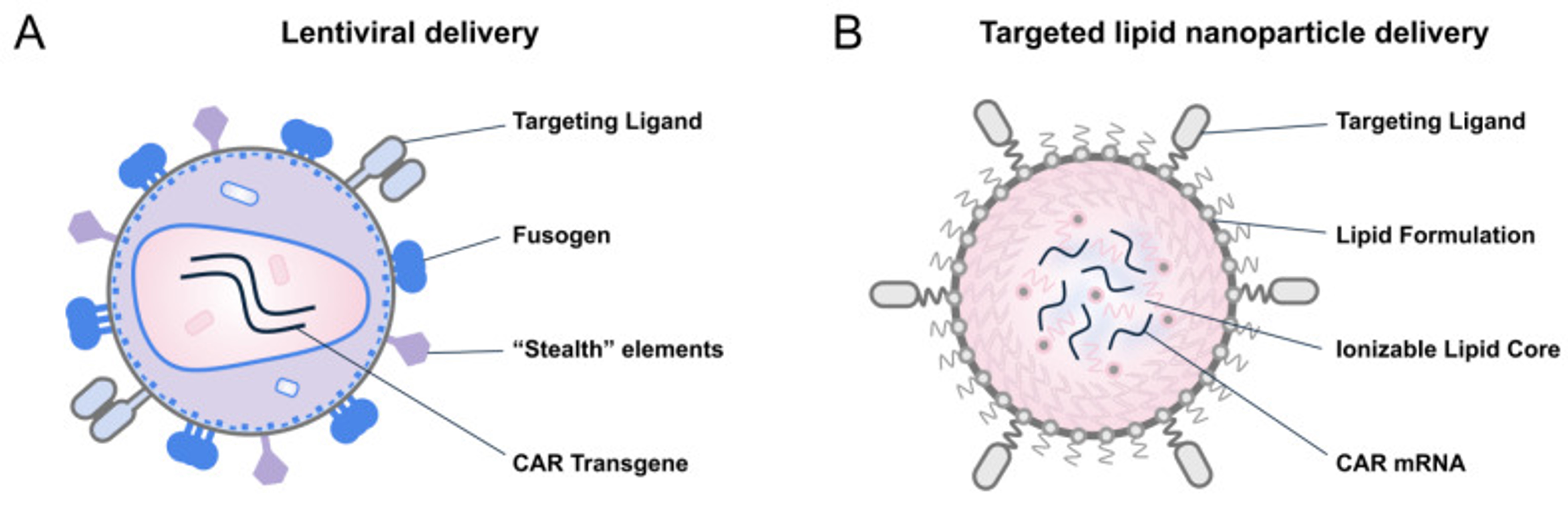
Figure 2. Advanced delivery systems for in situ CAR-T cell engineering. (doi:10.3390/ijms27041737)
Expanding Clinical Applications
Although hematological malignancies remain the primary focus of In Vivo CAR-T development, the technology is rapidly expanding into broader therapeutic areas.
1. Hematological Malignancies
Blood cancers provide the most clinically advanced setting for In Vivo CAR-T. Current research focuses primarily on well-established CAR targets, including CD19 and BCMA. Early clinical programs are evaluating whether direct in vivo engineering can achieve therapeutic efficacy comparable to conventional CAR-T while simplifying treatment logistics. If successful, this strategy could significantly improve patient access by eliminating the need for individualized manufacturing and reducing treatment delays.
2. Solid Tumors
Solid tumors remain one of the greatest challenges for CAR-T therapy. Unlike hematological malignancies, solid tumors possess complex immunosuppressive microenvironments, heterogeneous antigen expression, limited immune cell infiltration, and multiple mechanisms of immune evasion. In Vivo CAR-T may offer unique advantages in this setting. Continuous in vivo generation of functional CAR-T cells could potentially improve immune persistence and sustain antitumor responses. Researchers are actively investigating CAR constructs targeting antigens such as B7-H3, HER2, mesothelin (MSLN), and other solid tumor-associated markers. While significant scientific hurdles remain, advances in targeted delivery and synthetic biology continue to broaden the possibilities for solid tumor applications.
3. Beyond Oncology
The potential of In Vivo CAR technology extends well beyond cancer. Researchers are increasingly exploring engineered immune cells for the treatment of autoimmune disorders, fibrosis, infectious diseases, and metabolic diseases. Rather than exclusively eliminating malignant cells, engineered T cells may eventually serve as programmable therapeutic platforms capable of regulating immune responses or delivering therapeutic proteins over extended periods. This broader vision positions In Vivo CAR-T as part of a larger movement toward in situ immune cell engineering, where immune cells become living therapeutic factories generated directly inside the patient.
Current Challenges
Despite remarkable progress, several scientific and translational challenges must still be addressed before In Vivo CAR-T becomes a routine clinical modality.
- ✔ Targeting specificity: Achieving highly selective delivery to T cells while avoiding off-target transfection remains essential for maximizing efficacy and minimizing safety risks.
- ✔ Controlling transgene expression: Researchers must optimize both the magnitude and duration of CAR expression to balance therapeutic activity with long-term safety.
- ✔ Manufacturing consistency: Although In Vivo CAR-T eliminates ex vivo cell manufacturing, production of complex delivery systems—including targeted LNP formulations—requires robust quality control, scalable manufacturing processes, and regulatory standardization.
- ✔ Clinical evidence: Long-term safety, persistence of engineered cells, durability of clinical responses, and repeat-dose feasibility must all be validated through larger clinical studies.
Future Perspectives
The rapid evolution of targeted gene delivery technologies is reshaping the future of engineered cell therapies. Innovations in antibody engineering, protein design, lipid chemistry, synthetic biology, and artificial intelligence are accelerating the development of increasingly sophisticated delivery platforms. AI-assisted protein engineering may further optimize targeting ligands, improve receptor binding, and enhance intracellular delivery efficiency, while advanced biomaterials continue to expand the design space for next-generation nanoparticles.
As these technologies mature, In Vivo CAR-T could transition from an experimental concept into a scalable therapeutic platform capable of treating a wide range of diseases. Rather than replacing conventional CAR-T entirely, In Vivo CAR-T is likely to complement existing approaches. Ex vivo manufacturing may remain preferable for certain indications requiring extensive cellular engineering, whereas in vivo engineering could provide a faster, more scalable option for broader patient populations.
Ultimately, the convergence of targeted delivery, programmable gene expression, and precision immune engineering represents one of the most exciting frontiers in modern biotechnology. In Vivo CAR-T is not simply an incremental improvement over existing CAR-T therapies—it represents a fundamental evolution in how engineered immune cells may be generated, delivered, and applied in clinical medicine.
Accelerate Your In Vivo CAR-T Research with ACROBiosystems Solutions
The rapid evolution of In Vivo CAR-T therapy has created growing demand for reliable research tools that support every stage of targeted gene delivery and immune cell engineering. From ligand discovery and targeted LNP development to delivery evaluation and CAR expression analysis, robust analytical reagents and standardized workflows are essential for accelerating research and improving experimental reproducibility.
To support these evolving research needs, ACROBiosystems offers a comprehensive portfolio of solutions designed for In Vivo CAR-T research. Our integrated platform empowers researchers throughout the development workflow, helping accelerate innovation in next-generation engineered cell therapies.
FAQ
Q1: What is In Vivo CAR-T Therapy?
A: In Vivo CAR-T Therapy is a next-generation cell therapy approach that genetically engineers T cells directly inside the patient's body instead of modifying cells through traditional ex vivo manufacturing. The technology uses targeted delivery systems, such as engineered viral vectors or targeted lipid nanoparticles, to deliver CAR-encoding genetic material into endogenous T cells, enabling the generation of therapeutic CAR-T cells in situ.
Q2: How does In Vivo CAR-T Therapy differ from traditional CAR-T therapy?
A: Traditional CAR-T therapy requires patient T-cell collection, genetic modification, expansion, quality testing, and reinfusion in a specialized manufacturing process. In Vivo CAR-T Therapy bypasses these steps by directly delivering CAR genetic instructions into T cells inside the patient, potentially reducing manufacturing complexity, shortening treatment timelines, improving scalability, and enabling more standardized therapeutic production.
Q3: What delivery technologies are used for In Vivo CAR-T Therapy?
A: Current In Vivo CAR-T research focuses on targeted gene delivery platforms including viral vectors and targeted lipid nanoparticles (tLNPs). Viral systems can provide efficient gene transfer, while tLNPs offer advantages such as flexible cargo delivery, scalable manufacturing, and the ability to incorporate targeting molecules that recognize specific T-cell markers such as CD3, CD4, CD5, CD7, and CD8.
Q4: What are the potential applications of In Vivo CAR-T Therapy?
A: In Vivo CAR-T Therapy is being explored primarily for hematological malignancies, including cancers targeting antigens such as CD19 and BCMA. Researchers are also investigating applications in solid tumors, autoimmune diseases, fibrosis, infectious diseases, and metabolic disorders by using engineered immune cells as programmable therapeutic platforms.
Q5: What are the main challenges of developing In Vivo CAR-T Therapy?
A: Major challenges include achieving precise T-cell targeting, controlling CAR expression levels and duration, ensuring delivery system safety, establishing scalable manufacturing processes, and generating sufficient clinical evidence regarding long-term safety and therapeutic durability.
References
1. Pierini S, Qureshi R, Pustylnikov S, Bartosh Z, Akimova T. In Vivo CAR-T Therapies-A New Era of Programmable Immunity. Int J Mol Sci. 2026;27(4):1737. Published 2026 Feb 11. doi:10.3390/ijms27041737
2. Chen Y, Xin Q, Qiu J, et al. In vivo CAR-T cell engineering: concept, research progress, potential challenges and enhancement strategies. Exp Hematol Oncol. 2025;14(1):133. Published 2025 Nov 18. doi:10.1186/s40164-025-00725-5
 Popular ArticlesRelated RecommendationsPopular Events
 AI-Assisted Bispecific Antibody Development: From Target Pairing Prediction to Experimental Validation2026-07-31Page Views:20
 A Comprehensive Guide to Sterility Testing in Biopharmaceutical Manufacturing: From Compendial Methods to qPCR-Based Rapid Testing2026-07-27Page Views:53
 Biomarkers: Enabling Precision Assessment of Cardio-Kidney-Metabolic (CKM) Syndrome2026-07-24Page Views:82
 Converging at BIO, ACROBiosystems Connects Emerging Innovation Assets with Global Strategic Opportunities2026-07-24Page Views:79
 Payload-Specific ELISA Kits for Intact ADC Quantification in Preclinical PK Studies2026-07-22Page Views:86






 Related Products