What is Affinity Testing?
 Publication Date:2020-12-21
 Page Views:12012
Antibody affinity has been subject to intensive research for over fifty years. Further study revealed that antibody affinity was important for three primary functions: activating B cells, eliminating antigens, and regulating immune responses. It was subsequently deemed of massive interest to novel therapeutics and bioengineering applications.
Affinity Testing is used increasingly in drug development to kinetically characterize binding events of relevant components, including drugs and targets, antibodies and antigens.
In this article we will explore some of the key concepts of binding affinity in the field of therapeutic antibody development, and highlight some key products and service used in antibody structural research.
Understanding Binding Affinity
Antibodies, also referred to as immunoglobulin (IG), are Y-shaped proteins synthesized exclusively by B cells. The secretion of antibodies by B lymphocytes plays a fundamental role in humoral immunity. These unique macromolecules are comprised of different amino acids composed in a near limitless range of sequences with different antigen-binding sites. Both antibodies and antigens are multivalent, which means they feature multiple binding sites. The total binding strength of an antibody across all these sites is defined as avidity, or functional affinity. Hence affinity and avidity are often confused.
When discussing antibody affinity, we are referring to the strength of a single bond (i.e. the epitope-paratope bond between an antibody and antigen at a single site). These intermolecular interactions are impossible to measure individually. Instead, aAffinity testing infers binding affinity from antibody concentration which is expressed as a function of the equilibrium dissociation constant (KD). This is used to rank order strengths of specific biomolecular interactions, showing an inverse relationship to antibody affinity. For instance, a small dissociation constant refers to high binding strength of the antibody to its antigen.
Importance of Affinity Testing
Antibody characterisation is a vital process across the entire clinical spectrum. Already, novel antibody drugs have proven effective at targeted treatment against cancers, various infectious diseases, and autoimmune diseases.
An increasingly valuable area of study focusses on the fragment crystallizable (Fc) region of antibodies. This tail region is known to interact with Fc receptors, enabling the activation/mediation of the immune system.
Assessing the structure-activity relationship of antibodies via affinity testing is now a hotly contested area of research and bioengineering. There are numerous methods of determining the dissociation constants of antibodies for specific targets, and to determine selectivity, including enzyme-linked immunosorbent assays (ELISA), Surface Plasmon Resonance (SPR) and Biolayer Interferometry (BLI)
Interested in learning more about affinity testing and Fc engineering?
ACROBiosystems is one of the industry’s leading developers of high-quality Fc receptor proteins with a choice of tags, suiting the ever-growing diversity of structural antibody testing.
Based on the Biacore T200/8K platform and ForteBio Octet platform, ACROBiosystems provides SPR /BLI analytical services to our valued customers. The SPR/BLI analytical services include antibody screening, antibody pairing/group, kinetic analysis, Fc receptor affinity testing and interaction measurement.
Contact a scientist today if you would like to learn more.
 Popular ArticlesRelated RecommendationsPopular Events
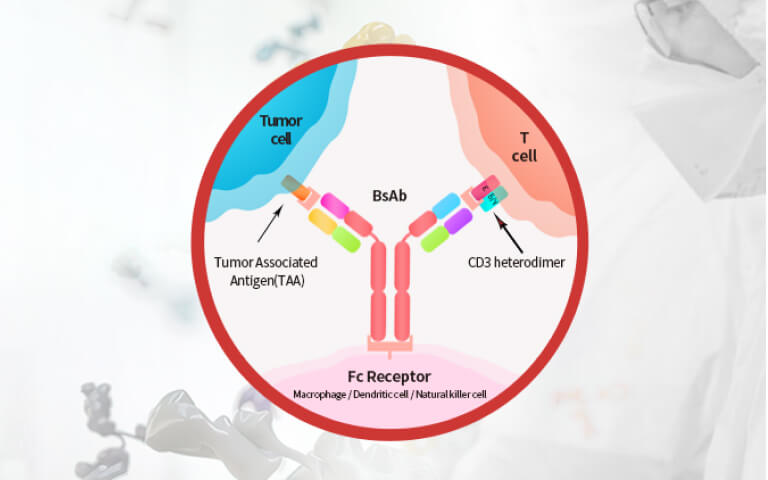 AI-Assisted Bispecific Antibody Development: From Target Pairing Prediction to Experimental Validation2026-07-31Page Views:51
 The Brain's Fountain of Youth: How Modern Neuroscience Is Decoding Healthy Brain Aging2026-07-31Page Views:18
 In Vivo CAR-T Therapy: Next-Generation CAR-T Cell Engineering and Gene Delivery Advances2026-07-29Page Views:45
 A Comprehensive Guide to Sterility Testing in Biopharmaceutical Manufacturing: From Compendial Methods to qPCR-Based Rapid Testing2026-07-27Page Views:65
 Biomarkers: Enabling Precision Assessment of Cardio-Kidney-Metabolic (CKM) Syndrome2026-07-24Page Views:96





 Related Products