Highly Validated Growth Factors/Cytokines Driving Advances in Organoid Research
 Publication Date:2024-05-14
 Page Views:4723
Organoids have emerged as transformative tools in biomedical research, revolutionizing how we approach drug discovery and disease modeling. These 3D cell culture models can simulate the structure and functional characteristics of human organs and tissues with remarkable capacity. Their ability to recapitulate in vivo conditions has garnered significant attention from regulatory bodies like the FDA, which recently endorsed the use of alternative models like organoids for drug testing, reducing reliance on animal studies.
Organoids represent a critical shift in in vitro modeling, providing a more physiologically relevant system compared to traditional 2D cell cultures. Derived from stem cells or primary cells, organoids can be cultured to form intricate structures that closely resemble in vivo counterparts. This high degree of complexity makes organoids invaluable tools for studying organ development, function, and disease progression.
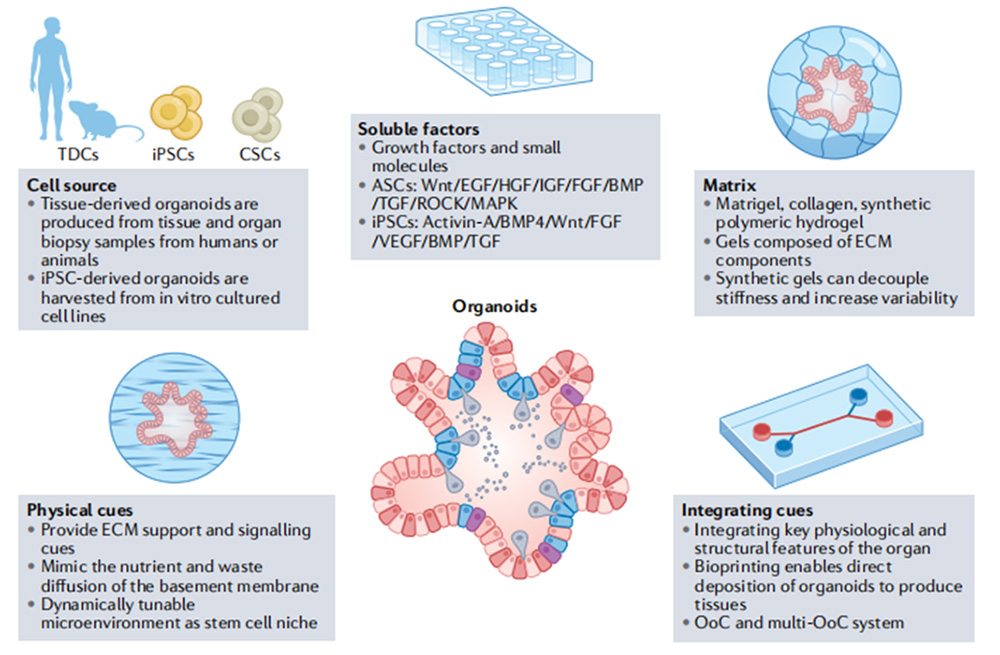
Fig 1. Components of organoid engineering. Nat Rev Methods Primers 2, 94 (2022).
Diverse Applications and Advantages
The applications of organoids span several crucial areas of biomedical research:
- Disease Modeling and Genetic Studies: Organoids can be cultivated from cells harboring specific disease traits or genetic mutations, enabling researchers to study complex diseases, including cancer and genetic disorders, and the effects of genetic alterations on disease progression and treatment response.
- Drug Discovery and Development: As 3D models that closely resemble human organs, they provide a more physiologically relevant environment for testing drug efficacy, toxicity, and mechanisms of action, streamlining the identification of potential treatments.
- Personalized Medicine: Patient-derived organoids can be used to examine the efficacy of multiple drugs, tailoring treatments to individual genetic backgrounds and disease profiles, enhancing treatment effectiveness and minimizing side effects.
The Role of Cytokines in Organoid Culturing
The successful cultivation of organoids necessitates the inclusion of essential components, including cells, matrix, physical cues, and soluble factors. We like to highlight three growth factors that are commonly used in culturing gastric, intestinal, hepatic, lung, prostate gland, and mammary organoids.
R-spondin 1
R-spondin 1 (RSPO1) is a secreted protein that functions as the ligand for Lgr5, a leucine-rich repeat-containing G protein-coupled receptor that serves as a marker for adult stem cells. Lgr5 expression is positively correlated with stem cell self-renewal and organoid expansion capacity. Through binding and activating the Lgr5 receptor, RSPO1 activates the canonical Wnt/β-catenin signaling cascade, a critical pathway governing stem cell proliferation, self-renewal, and the maintenance of an undifferentiated state in gastrointestinal tissues and cell populations. As a potent agonist of Wnt signaling, RSPO1 plays a pivotal role in supporting the development and long-term expansion of organoid cultures derived from mammary, intestinal, and hepatic tissues. Its ability to augment Wnt/β-catenin activity promotes the self-renewal and maintenance of stem/progenitor cell compartments within these organoid models.
Noggin
Noggin is an endogenous inhibitor of BMPs, and it plays a crucial role in modulating cell differentiation, proliferation, and apoptosis. It is also one of the fundamental factors essential for organoid culture. Noggin can bind to BMP4, BMP7, and other BMPs, reducing the inhibitory activity of PTEN on β-catenin, thereby coordinating Wnt signaling to activate stem cells. Research has demonstrated that long-term culture of rat liver organoids requires sustained high levels of Wnt signaling and continuous suppression of BMP signaling. Experiments have shown that in the absence of Wnt or Noggin, the expression of the stem cell marker Lgr5 is downregulated, indicating that Lgr5 expression is dependent on Wnt activation and BMP inhibition. Additionally, BMP signaling can directly influence the expression of stemness genes like Lgr5, affecting organoid proliferation and stemness maintenance. Consequently, Noggin promotes organoid expansion by inhibiting BMP signaling.
Epidermal Growth Factor (EGF)
EGF is a critical growth factor required for the culture of organoids derived from various tissues, including the gastrointestinal tract, liver, thyroid, and brain. Through binding to its receptor, EGFR, EGF induces proliferative signaling cascades that support the self-renewal and expansion of adult stem cell populations within organoids. Research has shown that inhibiting EGFR signaling, either pharmacologically or by EGF depletion, significantly impairs organoid proliferation and induces cellular quiescence and differentiation. EGF's mitogenic activity is crucial for sustaining long-term organoid growth, preserving the undifferentiated stem/progenitor cell compartment, and recapitulating the complex cellular dynamics and architecture of native organs. Beyond proliferation, EGF signaling also regulates differentiation, migration, and survival, contributing to the structure and functionality of organoid models.
ACROBiosystems' Growth Factors/Cytokines for Organoid Research
To support organoid 3D cell culture research, we offer a series of premium growth factors with high purity, high bioactivity, and ultra-low endotoxin levels. These growth factors include EGF, Noggin, R-Spondin 1, FGF10, FGF2, Activin A, and others, validated through real organoid growth assays. This diverse portfolio enables researchers to establish and optimize organoid cultures, facilitating groundbreaking studies in developmental biology, disease modeling, and regenerative medicine.
Verified by multiple organoid cultures
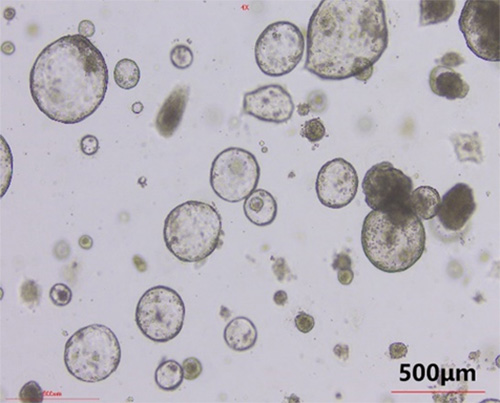
Gastric organoid
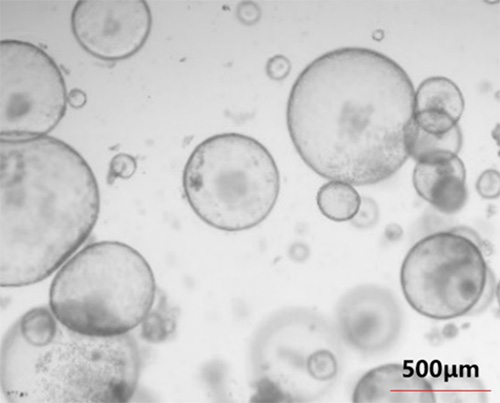
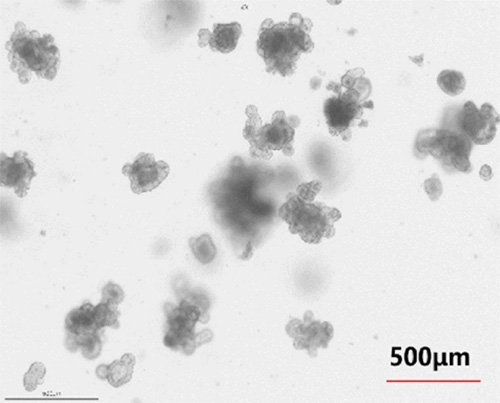
Fig 2. Human EGF (Cat. No. EGF-H52H3), Noggin (Cat. No. NON-H5257), R-spondin1 (Cat. No. RS6-H4220), FGF10 actively support gastric organoid growth during multiple passages and long-term culture processes.
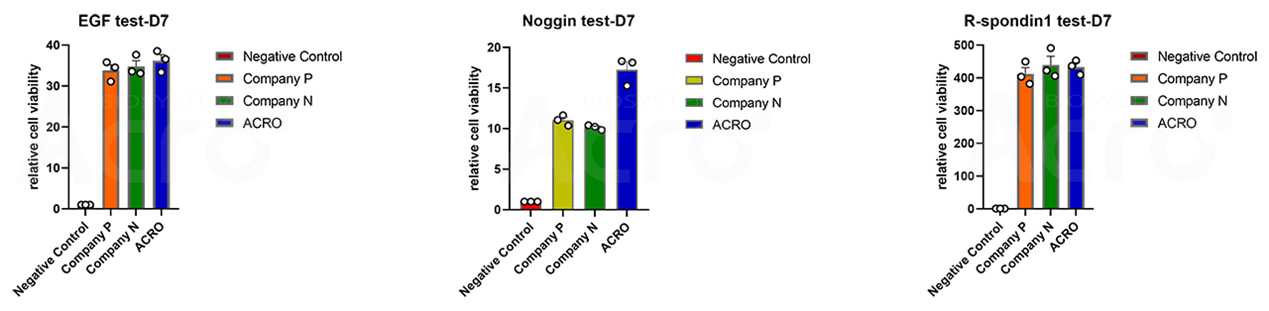
Organoid Cell Viability
High Bioactivity
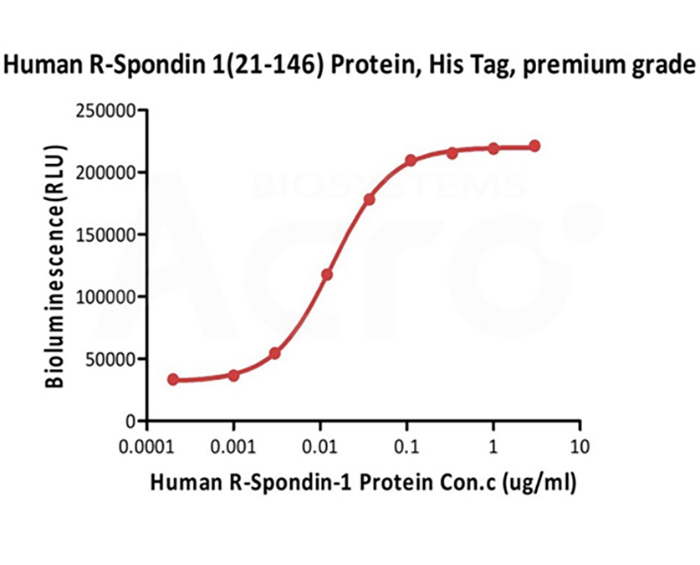
Fig 6. Human R-Spondin 1 (21-146), His Tag, premium grade (Cat. No. RS6-H4220) induced TCF reporter activity in HEK293 cells. The EC50 for this effect is 0.0138-0.0163 µg/mL (Routinely tested).
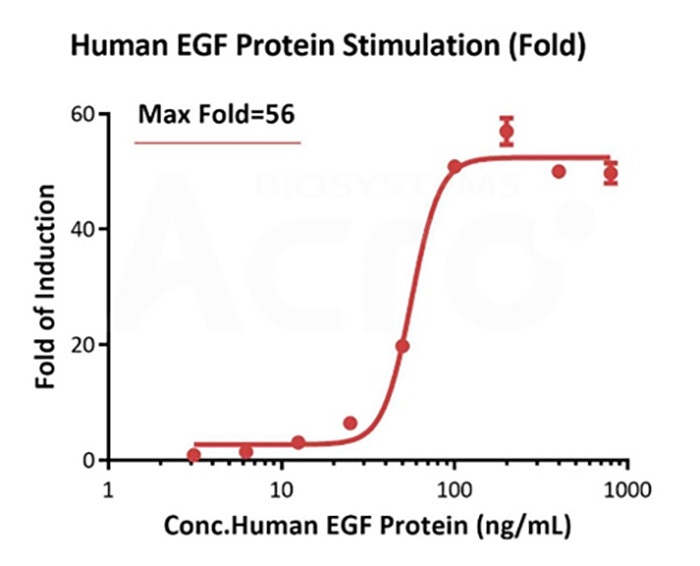
Fig. 7 The EGFR (Luc) HEK293 Reporter Cell was stimulated with serial dilutions of Human EGF Protein, His Tag, premium grade ( Cat. No. EGF-H52H3). The max induction fold was approximately 56 (Routinely tested).
 Popular ArticlesRelated RecommendationsPopular Events
 AI-Assisted Bispecific Antibody Development: From Target Pairing Prediction to Experimental Validation2026-07-31Page Views:52
 The Brain's Fountain of Youth: How Modern Neuroscience Is Decoding Healthy Brain Aging2026-07-31Page Views:21
 In Vivo CAR-T Therapy: Next-Generation CAR-T Cell Engineering and Gene Delivery Advances2026-07-29Page Views:46
 A Comprehensive Guide to Sterility Testing in Biopharmaceutical Manufacturing: From Compendial Methods to qPCR-Based Rapid Testing2026-07-27Page Views:67
 Biomarkers: Enabling Precision Assessment of Cardio-Kidney-Metabolic (CKM) Syndrome2026-07-24Page Views:97




 Related Products